
Emilija Pundziute Gallois
Emilija Pundziute-Gallois , Associate Professor at Institut Catholique de Paris, and researcher at Vytautas Magnus University in Kaunas. She is an author of “Diplomacy of Arrogance: Russia in the Baltic States”..


Introduction
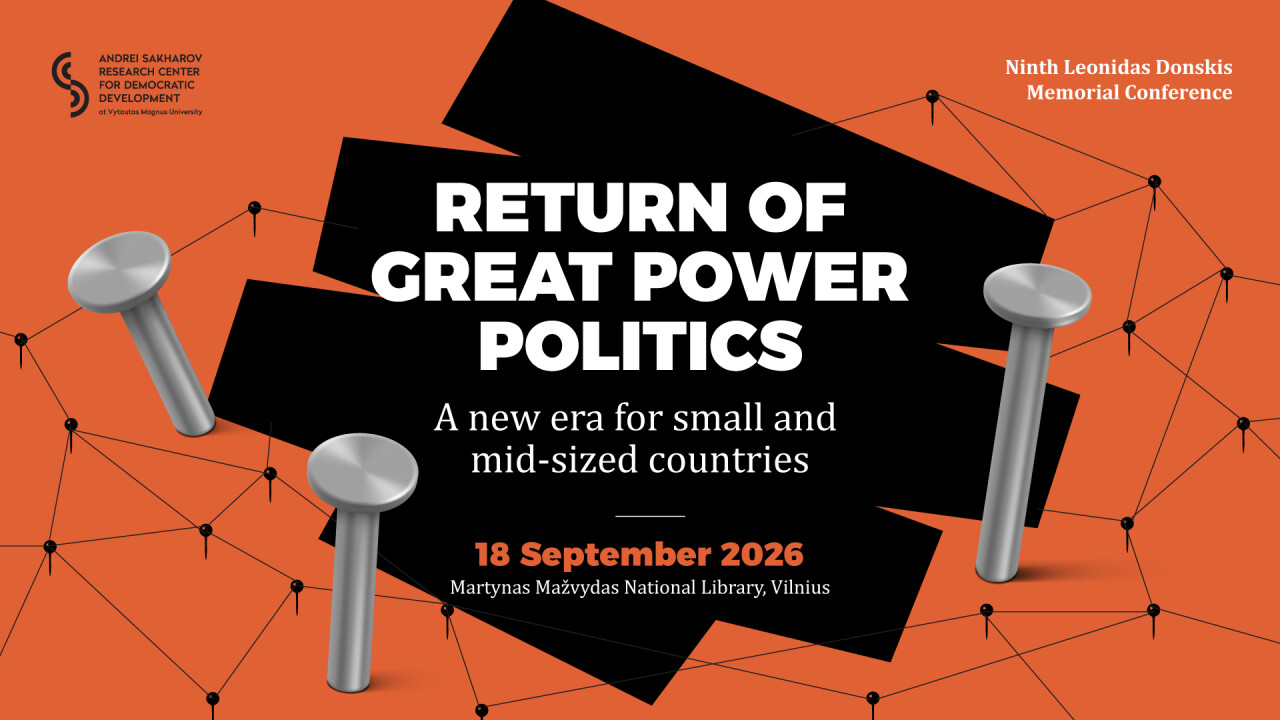
In an era of geopolitical uncertainty, small states face renewed vulnerability. Yet their strength may lie not in isolation, but in solidarity, cultural connection, and shared moral imagination. This interdisciplinary conference, dedicated to the legacy of Leonidas Donskis, explores how small states navigate risk, build alliances, and shape their place in an unstable world.
In today’s shifting geopolitical landscape, small and medium-sized states once again find themselves in a space of heightened risk. On their own, they possess limited power, while unstable alliances, rapid geopolitical shifts, and an increasingly unpredictable international order deepen their vulnerability. The world seems to have returned to the Great Power Politics of the 19th century, in which a few superpowers decide the course of
history.
Yet unity cannot be reduced to nothing but formal political arrangements or territorial configurations. It exists as a cultural and intellectual space – woven through shared histories, creative exchange, and a common humanistic tradition. Within this broader fabric, while small and mid-sized states are geopolitically fragile in isolation, they gain strength and visibility through integration into networks of solidarity. They become part
of a larger conversation shaped by history, literature, philosophy, and culture. As Leonidas Donskis often remarked, the future of small and mid-sized states depends not only on power, but on friendship, solidarity, and moral imagination.
This raises a fundamental question: do small and mid-sized states merely adapt to the interests of more powerful actors, or can they actively shape their position by building alliances and cultivating shared cultural, historical, and intellectual ties? In other words, do they remain objects of geopolitical dynamics, or become subjects capable of co-creating them?
Ultimately, the question of small and mid-sized states today is not only strategic but also moral: are we capable of building common strength where individually we remain weak? How do we improve international institutions so they would allow unity without dependence on superpowers?
The aim of the Ninth Leonidas Donskis Memorial Conference is to explore the strategic position of small and mid-sized states and their capacity to build alliances and cooperation in regional and global contexts. It will address these questions through historical, political, cultural, moral, and geopolitical perspectives.
Emilija Pundziute-Gallois , Associate Professor at Institut Catholique de Paris, and researcher at Vytautas Magnus University in Kaunas. She is an author of “Diplomacy of Arrogance: Russia in the Baltic States”..
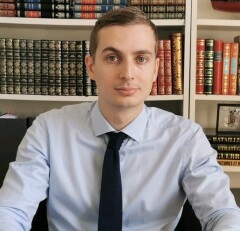
Thibault Fouillet is the scientific director of the Center for the Analysis and Forecasting of International Risks (CAPRI) and...

Dr. Domitilla Sagramoso is a Senior Lecturer in Conflict and Security at the Department of War Studies, King’s College London. She is an...
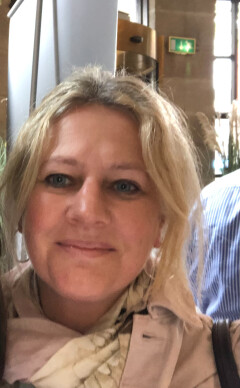
Natasha Kuhrt is a senior lecturer in International Peace & Security in the Dept of War Studies, King's College London, UK. Her research interests include a regional focus on Russian foreign...

Rick Fawn is Professor of International Relations at the University of St Andrews in the United Kingdom, and a specialist on international security, with a geographic concentration on the former communist...

Craig Oliphant is Senior Adviser at the Foreign Policy Centre in London. A former British diplomat (FCDO), from 1990s to 2011, Craig focused...

Janet is a journalist and podcast host specialised in accountability processes for
international crimes...

Janet Gunn is a former Research Analyst in the British Foreign and Commonwealth Office (1970-2006), specialising on the Soviet Union...
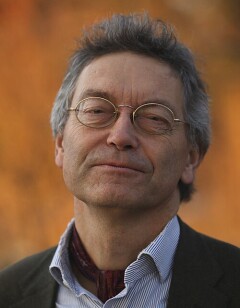
Iver Brynild Neumann is a Norwegian political scientist and social anthropologist. He is Director of the Fridtjof Nansen Institute...

Edward Lucas is a writer and security expert. His expertise includes energy, cyber-security, espionage, information warfare and Russian foreign and defence policy...
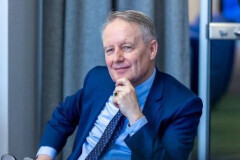
Jack R. Twiss Quarles van Ufford is a lecturer at the Baltic Defence College in Tartu, Estonia, and a former Ambassador of the Kingdom of the Netherlands to Lithuania...

Viktoras Bachmetjevas is the chair of the Department of Philosophy at Vytautas Magnus University in Kaunas, Lithuania. He specializes in continental ethics...

Victoria Vdovychenko is an internationally recognised expert on European security, defence innovation, and Ukraine’s relations with the EU and NATO...
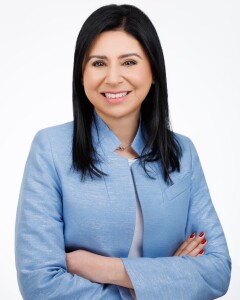
Negah Angha is a former U.S. national security and foreign policy official with two decades of experience in diplomacy...
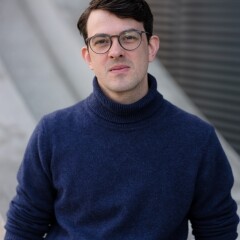
Oliver Moody is Berlin correspondent at The Times and Sunday Times and
the author of Baltic: The Future of Europe (2025)...
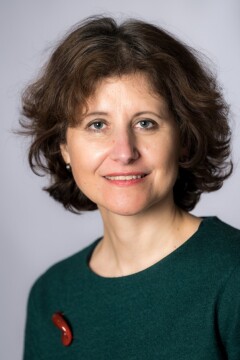
Audra Plepyte is a Senior Advisor at the Ministry of Foreign Affairs of Lithuania. Until July 2026, she served as a Vice Minister of Foreign Affairs...

Professor in Political Science, he is currently affiliated in CEVRO University in Prague. He focuses on civil society...
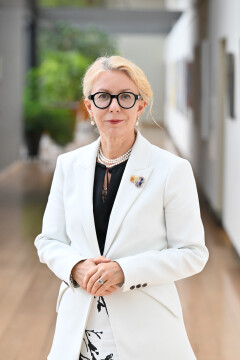
Lina Ruksteliene is Vice Minister of Foreign Affairs of the Republic of Lithuania,
responsible for transatlantic cooperation and security policy...
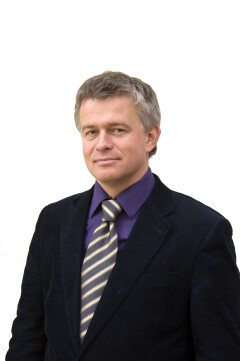
Sarunas Liekis is a professor of the Faculty of Political Science and Diplomacy at Vytautas Magnus University, Kaunas. He also is a professor at the Silezian University...



The Andrei Sakharov Research Center contributes to the development of a pluralist and democratic society in Eastern Europe and the former Soviet Union.


